
General
What Makes a High-Performance Home Different?
1 September 2026
What Makes a High-Performance Home Different?
A high-performance home isn't just about adding more insulation. It's about thinking about the house as a complete system, how it's insulated, how airtight it is, how moisture is managed, how the windows perform, how fresh air is provided and, importantly, how all of those elements work together. At Peak Building Taranaki, we've been gaining hands-on experience in high-performance residential construction, including working with SIP construction systems and the additional detailing that comes with building homes designed to perform at a higher level. It's an area of building we're particularly interested in, because when the details are considered properly, the benefits can be felt every day by the people actually living in the home.
It's About More Than Energy Efficiency
When people hear "high-performance home", the first thing they often think about is lower energy use. That's certainly part of it, but building performance goes much further. A well-designed and well-constructed high-performance home aims to provide a more stable and comfortable indoor environment while reducing unnecessary heat loss and managing moisture effectively. Rather than relying heavily on heating and cooling to compensate for the way a building performs, the building itself does more of the work. That starts with the building envelope.
Creating a Better Building Envelope
The building envelope is essentially the separation between the conditioned interior of your home and the environment outside. That includes the walls, roof, floor, windows and doors. In a high-performance home, careful attention is given to how these components connect. Insulation is important, but so is continuity. A highly insulated wall isn't nearly as effective if there are poorly considered areas around it allowing significant heat to escape. That's why junctions, penetrations, windows, doors and structural connections all deserve careful thought. Again, it's often the details you can't see when the house is finished that make the difference.
Airtightness Matters
Airtightness is another important part of high-performance construction. Traditional homes can have numerous small gaps and penetrations throughout the building envelope that allow uncontrolled air movement. Individually, those gaps might seem insignificant. Collectively, they can have a substantial effect on how a building performs. High-performance construction puts much greater emphasis on creating a continuous airtight layer and carefully detailing penetrations and junctions. That can mean paying close attention to membranes, tapes, service penetrations and connections between different building elements. The principle itself is relatively simple. The execution requires care.
But Doesn't a House Need to Breathe?
Yes absolutely people need fresh air. The difference is between controlled ventilation and uncontrolled air leakage. Rather than relying on random gaps in the building envelope for fresh air, high-performance homes can use purpose-designed ventilation strategies to provide fresh air in a more controlled way. Depending on the design and performance target, this may include mechanical ventilation with heat recovery. The exact solution will depend on the home, its design and the performance standard being targeted.
What Are SIPs?
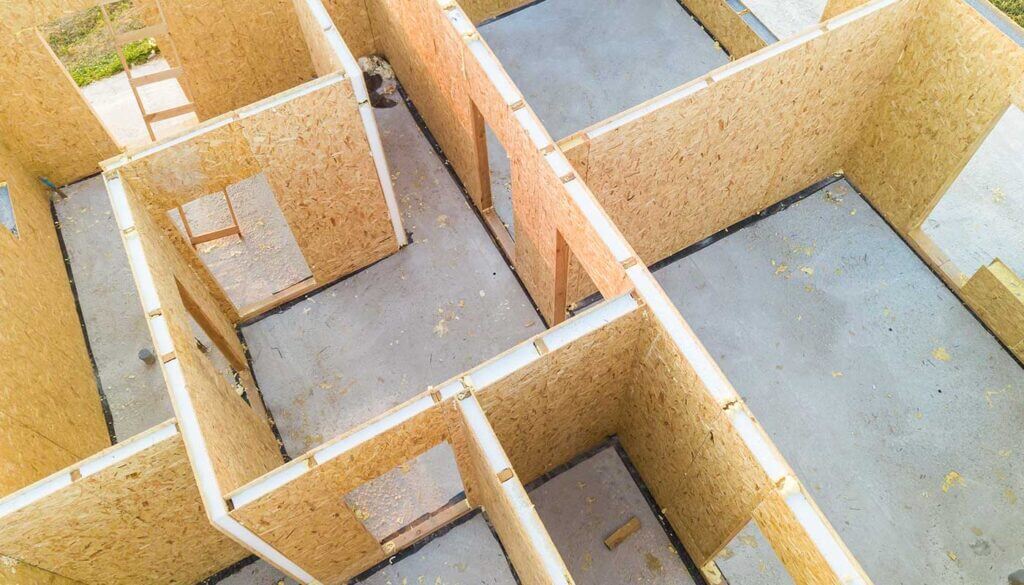
One construction system used in some high-performance homes is Structural Insulated Panels, commonly known as SIPs. SIPs typically combine structural components with an insulating core to form highly insulated wall and roof assemblies. Like any construction system, however, simply using a high-performance product doesn't automatically create a high-performance home. The connections between panels, penetrations, windows, doors, foundations and roof systems still need to be properly considered and constructed. That's something we've experienced firsthand. The system matters. The detailing matters just as much.
Good Design and Good Construction Have to Work Together
One of the things we find particularly interesting about high-performance construction is how closely the design and construction processes are connected. An excellent design still relies on careful execution on site. Likewise, excellent workmanship can't completely compensate for fundamental problems in the design. The best outcomes happen when the homeowner, designer, consultants, builder and trades understand what the project is trying to achieve and work toward that goal together. For builders, that means understanding the intention behind the details rather than simply following drawings without considering how everything works as a system.
Does Every Home Need to Be a Passive House?
Not necessarily. There are different levels of building performance and different approaches available depending on the homeowner's goals, budget, design and site. Some homeowners may want to pursue a recognised performance standard. Others may simply want to incorporate better insulation, improved airtightness, quality windows and more thoughtful building-envelope detailing into their project. The important thing is having those conversations early. Performance is much easier to incorporate when it's considered during design than when somebody tries to add it halfway through construction.
Building Better
For us, high-performance construction represents something bigger than any individual product or building system. It's about understanding how buildings work. It's about questioning details. It's about planning before construction begins. And it's about recognising that the quality of a home isn't measured only by what it looks like on handover day, but by how it performs for the people living there for years to come. We'll continue sharing what we're learning and experiencing through our Building Better series, including SIP construction, airtightness, insulation, moisture management and the details that bring these systems together. Because building better starts with understanding the details. Peak Building Taranaki Architectural Renovations • New Builds • High-Performance Construction • Design & Build